1. Keywords
Biellmann spin; I-spin; active flexibility; spin position control; cross-sport training; unicycle performance; single-leg control; off-ice training
2. Case at a Glance
The athlete was a 10-year-old novice-aged female figure skater who attended one 50-minute in-person off-ice session per week. The broader aim was to raise overall skating-related physical capacity. For spin development, the goal was not only to increase flexibility, but also to improve axial control, active position holding, and the ability to maintain or increase rotational speed.
Because the program also included strength, stretch-shortening cycle (SSC), and explosive training for jumping, flexibility work was not treated as an isolated objective. Training principles from other performance sports with similar physical demands—particularly unicycle performance, as well as cheerleading and rhythmic gymnastics—were considered when designing the off-ice program.
Within approximately four months, the Biellmann position progressed from a same-side hold to a cross-body hold. The I-spin, which had not initially been used in competition because rotational speed was difficult to maintain, developed into a competition-usable position with improved active control and speed. Competition protocols later showed an overall upward trend in GOE for the spin elements in which these positions were incorporated.
3. Background
The athlete was a 10-year-old female figure skater training with a club in a prefecture neighboring the studio. There was no same-age, same-level training partner within the club, so the athlete and parent also looked to skaters from other teams as reference points. Both were highly motivated, and the parent actively sought appropriate developmental opportunities while allowing the athlete to take ownership of her training.
The club provided off-ice training approximately once per week. According to information shared by the parent, technical feedback from the skating coach focused more often on jumps than on spins. The athlete had also experienced several other sports for relatively short periods, including swimming, cheerleading, gymnastics, basketball, and soccer.
4. Initial Assessment
Floor split flexibility showed a noticeable side-to-side difference. With the left leg forward, the athlete could reach the floor fully, whereas with the right leg forward, the posterior thigh remained several centimeters above the floor on visual assessment.
For the Biellmann position, the athlete could already achieve the basic shape, but the position relied substantially on lumbar extension. Shoulder mobility and strength appeared limited, and the elevated leg depended heavily on being pulled upward by the hand.
For the I-spin position, the athlete could also achieve the basic shape off the ice, but active strength to hold the elevated leg was limited. Single-leg support and the sensation of organizing the body over the supporting leg were also weak. On the ice, rotational speed was difficult to maintain, and a different spin position was therefore being used in competition.
The foot arch also tended to collapse under load, so alignment from the supporting foot through the trunk required attention. With future progression toward more difficult jumps in mind, reducing repeated reliance on lumbar compensation during extreme flexible positions was considered desirable.
5. Goals
No single performance target or fixed deadline was established at the outset. However, the athlete was approximately six months away from the competition season, so the practical aim was to develop higher-quality, competition-usable spin positions as efficiently as possible while continuing to build the physical qualities required for jumping.
6. Role Boundaries and Communication
On-ice technical instruction remained the responsibility of the athlete’s skating coach. The off-ice program was informed by videos recorded by the parent, feedback communicated from the skating coach through the parent, and regular discussion of the athlete’s current training needs. These observations were used to adjust the physical preparation without replacing on-ice technical coaching.
7. Training Intervention
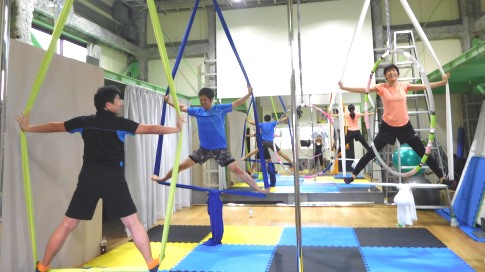
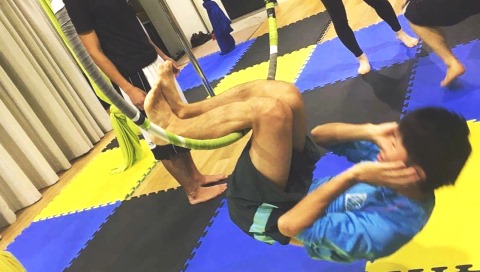
The overall program included flexibility work, short-distance drills, SSC and reactive neuromuscular training for jumping, strength work, and exercises using aerial apparatus. Spin-position training was therefore embedded within a broader physical-development program rather than conducted as flexibility training alone.
Cross-Sport Spin-Position Design
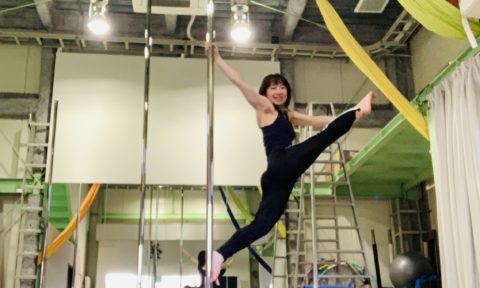
For flexible spin positions, training principles were adapted from work with unicycle performers, who must also maintain Biellmann- and I-spin-like positions while controlling the body over an unstable support condition. The shared physical demands were used as a basis for exercise selection rather than transferring another sport’s methods unchanged.
Active Leg-Lift Strength
The athlete practiced generating and maintaining leg elevation with the hip and trunk musculature rather than relying primarily on the hand to pull the leg upward.
Single-Leg Support and Axial Control
Exercises emphasized supporting the body over one leg, maintaining the trunk axis, and controlling pelvic orientation while the free leg moved into a flexible position.
Shoulder Mobility With Strength
Shoulder mobility and active control were trained so that the upper-body position required for the Biellmann could be created with less reliance on compensatory lumbar extension.
Flexibility With Active Control
The program emphasized using flexibility together with strength and postural control. The objective was not simply to reach a larger range of motion, but to make the position more actively controllable under movement demands.
8. Timeline
Months 0-2: Foundational Flexibility and Strength
Training emphasized basic flexibility and strength while continuing short-distance, jumping, SSC, and reactive coordination drills.
Months 2-4: Broader Movement-Control Training
Short-distance and jumping drills continued. Aerial apparatus and other exercises requiring varied body control were added. Principles from other performance sports were adapted to develop flexible positions together with single-leg stability, axial control, and active position holding.
Month 4 Onward: Competition Use and Evaluation
By approximately Month 4, both spin positions had changed sufficiently to be used more effectively in competition. Competition protocol data were followed through approximately Month 7 to examine how the relevant spin elements were being evaluated.
9. Results
1. Changes Observed by Approximately Month 4
Biellmann
- The Biellmann progressed from a same-side hold (right hand to right foot) to a cross-body hold (left hand to right foot).
- The cross-body position became usable in the athlete’s on-ice competitive program.
I-Spin
- At the start of training, the I-spin was not used in competition because maintaining rotational speed was difficult.
- The athlete became better able to hold the elevated leg actively rather than relying primarily on the hand.
- The position became narrower and more organized around the axis.
- Rotational speed also appeared to improve based on coaching observation and video review.
- The I-spin developed into a position that could be incorporated into the competitive program.
2. Competition Protocol Trends
Competition protocols showed an overall upward trend in both GOE points and judges’ GOE marks for the spin elements in which the I-spin and Biellmann positions were incorporated.
For the foot-change spin incorporating the I-spin position, judges’ marks were mostly around 0 to +1 during the earlier period and shifted mainly toward +1 to +2 from approximately Month 4 onward. Some judges later awarded +3, although these marks were not consistent across the full panel. Level 4 also became more consistently achieved in the later period.
The layback spin incorporating the Biellmann position showed greater variability, particularly early in the observation period, but later performances were more frequently evaluated in the +1 to +2 range.
|
Period |
Foot-change spin with I-spin |
Layback spin with Biellmann |
|
Months 1-3 |
Mean GOE ≈ +0.28; judge marks mainly 0 to +1 |
Mean GOE ≈ -0.02; judge marks highly variable |
|
Months 4-7 |
Mean GOE ≈ +0.59; judge marks mainly +1 to +2 |
Mean GOE ≈ +0.34; judge marks increasingly around +1 to +2 |
Individual judge marks varied between competitions. The table summarizes the overall pattern rather than the highest mark awarded by an individual judge. GOE reflects the spin element as a whole and cannot be attributed specifically to the I-spin or Biellmann position.
10. Evidence Available
On-ice videos; athlete and parent comments; competition protocols including GOE; session records; home-training records.
The location and filming conditions of the on-ice videos were not always standardized.
11. Discussion
The athlete already had relatively high flexibility through the back and lumbar region. One possible approach would have been to pursue still greater extreme-range flexibility. Instead, the program prioritized active control of the available range while continuing jump, SSC, and strength training. This was intended to avoid treating flexibility as a separate quality from the force production and postural control required in competitive skating.
The cross-sport component was based on shared movement demands rather than on the assumption that training methods from another sport would transfer automatically. In particular, unicycle performance provided a useful reference because similar flexible positions must be maintained while the performer controls the body over an unstable support condition.
At this competitive level, the same-side Biellmann hold was considered a more commonly acquired position than the cross-body hold. Developing a cross-body position similar to that used by an elite skater admired by the athlete also appeared to contribute positively to training motivation.
12. Practical Takeaways
Cross-sport training principles may help coaches design flexible-position training without isolating flexibility from strength, postural control, and explosive qualities.
Reducing reliance on lumbar compensation was considered desirable, particularly as jump difficulty was expected to increase. In this case, the program emphasized active leg elevation, shoulder mobility with strength, and single-leg axial control rather than seeking additional range of motion alone.
Short-distance and jumping drills were continued alongside spin-position work so that training for flexible positions did not replace jump-related physical preparation. The spin work simultaneously emphasized the athlete’s ability to keep the elevated leg supported actively rather than relying primarily on the hand.
13. Limitations
Initial assessments of flexibility, active leg-lift capacity, shoulder function, postural control, and foot alignment were based primarily on practical observation rather than standardized quantitative measurements. Spin speed was assessed through video and coaching observation rather than instrumented measurement.
The athlete continued regular on-ice practice and received technical coaching while also completing a broader off-ice program that included strength, jumping, SSC, flexibility, and movement-control exercises. Physical maturation may also have contributed to the observed changes. The independent contribution of the cross-sport training approach therefore cannot be isolated.
Competition protocols provided an externally judged outcome; however, GOE reflects the quality of the spin element as a whole and cannot be attributed specifically to the Biellmann or I-spin position, or to the off-ice intervention alone.
This was a single case involving a highly motivated 10-year-old skater with previous exposure to several sports. The adaptation of training principles from unicycle performance and other sports represents a coaching rationale in this case and should not be interpreted as evidence that these methods will produce the same outcomes in other figure skaters.